Roses in the Ruins
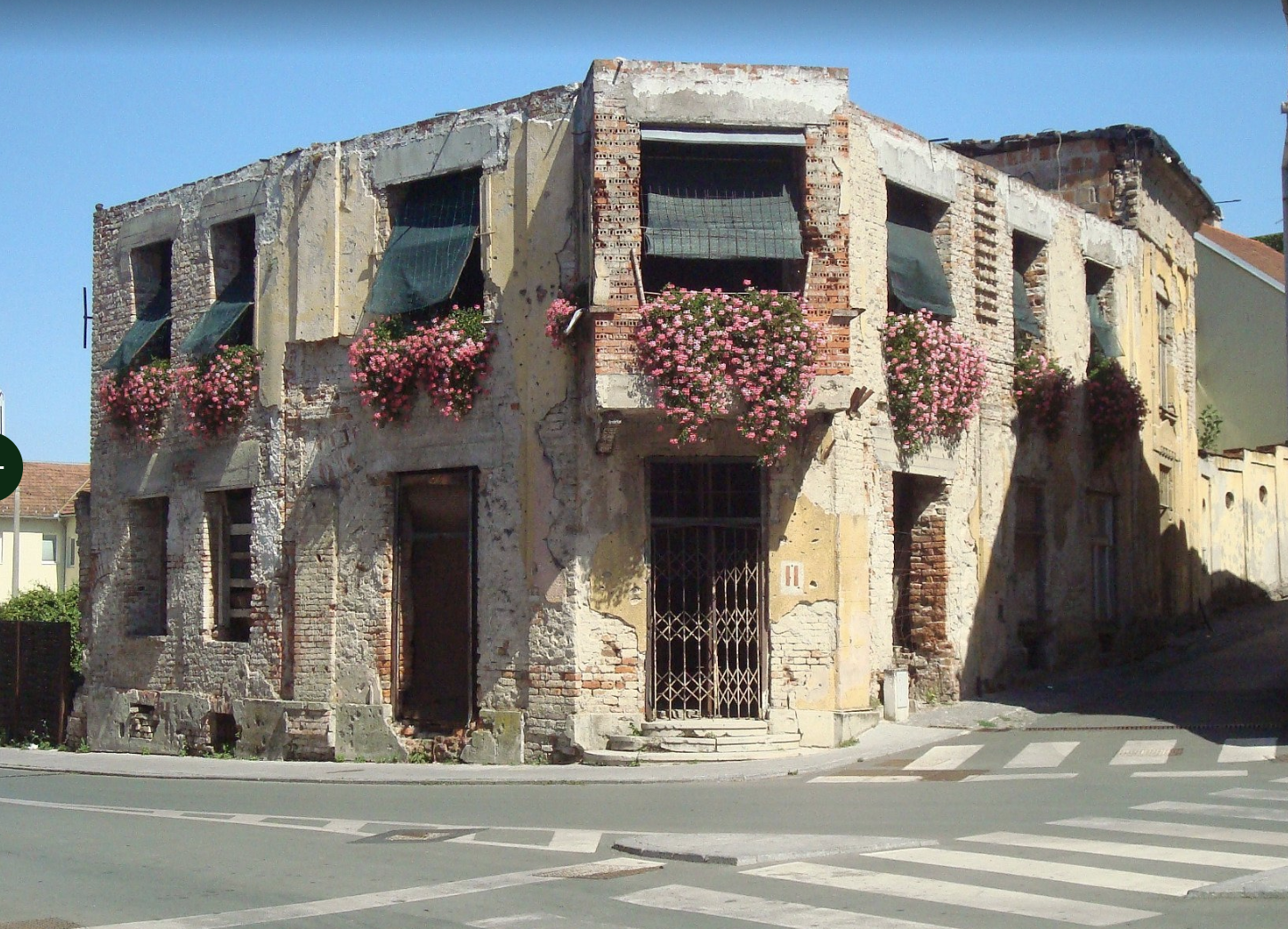
I was just in Vukovar, Croatia, where I witnessed the extraordinary impact of war and the resilience of those who survived. One of the most moving examples was the ruins of a stone house in the city center, bullet-ridden and destroyed in 1991. It stands today unrestored, a reminder of what occurred.
Each year, thousands of roses spill out of those bombed-out windows, a testament that life and beauty and new possibilities can be present, even after tragedy.
Battle Scars
I was profoundly moved by what I saw. I was also aware of how recently this all had occurred — within my own lifespan — and of how privileged my own life has been.
Most of us haven’t experienced war like this. All of us, though, have some form of battle scars. And we can learn from those whose battle scars come from actual war.
Some of our scars are external, but more often they are internal. And how we relate to those scars can shape so much of how we move through our lives.
Business and professional life often focuses on perfection. Smoothing over and covering up scars. Pretending those battle wounds don’t matter. Rebuilding and restoring back to “brand new.” And that’s just not accurate. More importantly, it doesn’t serve us.
Some of my own battle scars are public and well known. Others are much deeper, more personal, known only to those closest to me. And they exist.
Every one of my clients has their own sets of scars, too. Some bear recent wounds, others from long ago. How my clients relate to those scars is often a powerful part of our work together. Some try to cover them and pretend nothing happened. Others downplay or “pooh pooh” the hard things they've been through. And for some, those scars occupy so much of their focus that it’s hard (right now) to see past them.
All of these ways of dealing with hard things are human. They are important (often necessary) ways to cope — until one day we realize that we want to relate to those scars differently. This can be the work of therapy and it can also be the work of good coaching.
Both/And
When my clients are ready, we begin to gently look at those scars. We work to allow (even to welcome) the scars and the damage to be there. And we also begin to explore what’s possible because of those scars: new growth, even beauty.
With time, those scars can become important testaments to our resilience and our ability to hold the both/and.
Yes, something terrible happened here. Yes, there is also beauty — not despite the terrible, but because of it. Yes, we are forever changed by our past. Yes, we also get to plant new seeds and allow new growth. We don’t need to pretend the past didn't happen. We also don’t need to be locked forever in it. When we can relate to our scars in this way, honoring them but not defined by them, new worlds of possibility open up.
Roses spill out of the windows.
Your Invitation to Reflect
We all have battle scars of some sort. How do you relate to yours? What is the impact of pretending they don’t exist? What is the impact of seeing yourself as limited or defined by those scars? Can you find the both/and?
Inspiration:
My tour guide in Vukovar fled the war as a child and lived as a refugee. He has now returned to his home city and made a point of sharing how many Serbian friends he has, and that their common experiences transcend politics. He said, “In politics, everything is black and white. Here, among the people, it is all grey.”